
How IRD Collects Tax Debt in New Zealand
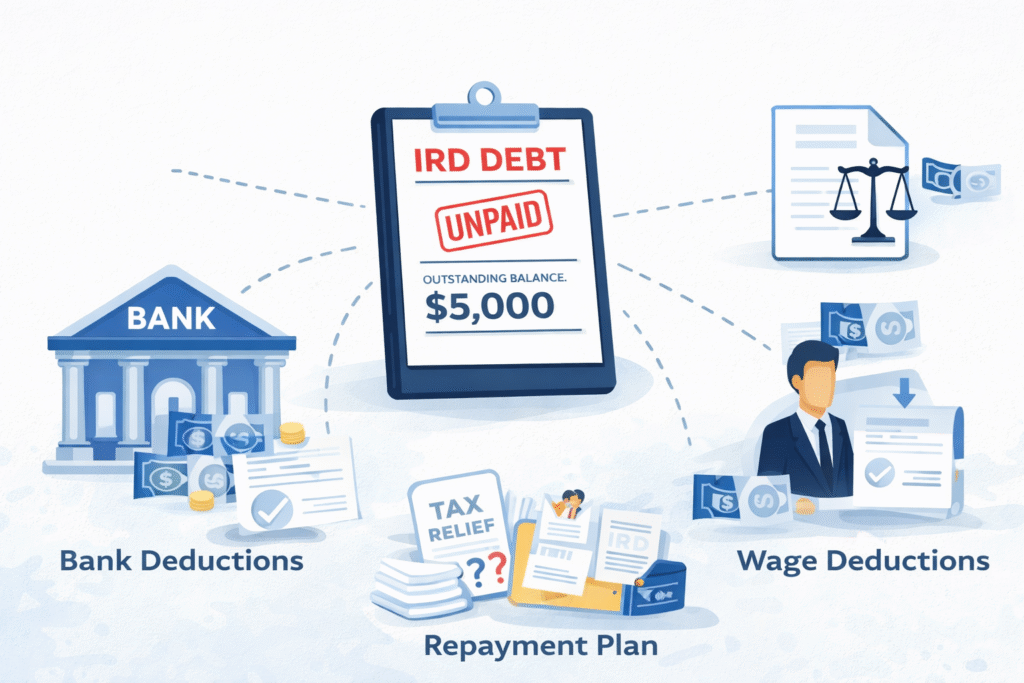
Understanding how IRD collects tax debt in New Zealand helps taxpayers avoid enforcement action. Inland Revenue usually begins with reminders and penalties, followed by repayment arrangements, and only later uses enforcement measures such as bank deductions or legal recovery if the debt remains unpaid.
Many taxpayers are uncertain about what happens after tax payments are missed. Knowing how IRD collects tax debt in New Zealand can help individuals and businesses act early, reduce penalties, and maintain better financial control.
How IRD Collects Tax Debt in New Zealand: Understanding the Recovery Process
Inland Revenue follows a staged approach to debt recovery. The goal is usually to encourage voluntary payment before enforcement becomes necessary. Each stage provides opportunities for taxpayers to resolve their balance.
Early Stage: Notices and Communication
The first step in how IRD collects tax debt in New Zealand is communication. Inland Revenue normally sends reminders, statements, or myIR notifications. These notices are intended to alert taxpayers and encourage early resolution.
At this stage, taxpayers still have the most flexibility to negotiate repayment or seek assistance.
What to Do If You Can’t Pay IRD Tax on Time
Penalties and Interest Increase the Debt
If payment is not made, late payment penalties and interest may be added. These charges increase over time, making early action important.
IRD Penalties and Interest Explained
This stage is often when taxpayers begin researching how IRD collects tax debt in New Zealand and what options remain available.
Repayment Arrangements Before Enforcement
Before moving to enforcement, Inland Revenue often allows repayment arrangements. These instalment plans help spread payments over time and are one of the most common solutions for resolving tax debt.
What an IRD Instalment Plan Is
How to Apply for an IRD Instalment Plan
How IRD Collects Tax Debt in New Zealand Through Bank Deductions
If reminders and repayment opportunities are unsuccessful, Inland Revenue may deduct funds directly from bank accounts. This step is usually taken only after previous attempts to resolve the debt have not been successful.
Bank deductions can significantly affect cash flow, particularly for small businesses.
Wage and Salary Deductions Explained
Another method used in how IRD collects tax debt in New Zealand is wage or salary deductions. These deductions allow gradual repayment but may reduce take-home income until the balance is cleared.
Applying Tax Refunds Toward Debt
Where refunds are due, Inland Revenue may apply them directly to outstanding balances. This is a common step and often occurs automatically.
Legal Recovery and Enforcement
In more serious situations, legal recovery measures may be used. These steps are generally considered only after other methods have been unsuccessful.
What Happens If You Ignore IRD Tax Debt
How to Reduce the Risk of Enforcement
Taking action early remains the most effective way to avoid enforcement. Inland Revenue often works with taxpayers who engage proactively.
Can IRD Write Off Tax Debt in New Zealand
Why Professional Advice Can Help
In more complex cases, professional advice can assist with repayment planning, hardship applications, and communication with Inland Revenue. Experienced advisors understand how IRD collects tax debt in New Zealand and can help taxpayers navigate repayment strategies.
For example, firms such as DFK ORB360 Chartered Accountants provide accounting and tax advisory services to individuals and businesses managing IRD obligations.
Official Guidance from Inland Revenue
IRD Debt and Insolvency Guidance
Frequently Asked Questions
How does IRD collect tax debt in New Zealand?
Inland Revenue typically begins with reminders and penalties, followed by repayment arrangements and enforcement actions if the debt remains unpaid.
Can IRD deduct money from bank accounts?
Yes. Inland Revenue may deduct funds directly from bank accounts in certain circumstances when tax debt remains unpaid.
Does IRD provide warning before enforcement?
In most cases, Inland Revenue sends reminders and notices before enforcement begins.
Can enforcement be prevented?
Yes. Contacting Inland Revenue early and arranging repayment often prevents enforcement measures.
Conclusion
Understanding how IRD collects tax debt in New Zealand allows taxpayers to make informed decisions and avoid escalation. Acting early, communicating with Inland Revenue, and seeking professional advice when necessary can significantly improve outcomes.
2 Responses