
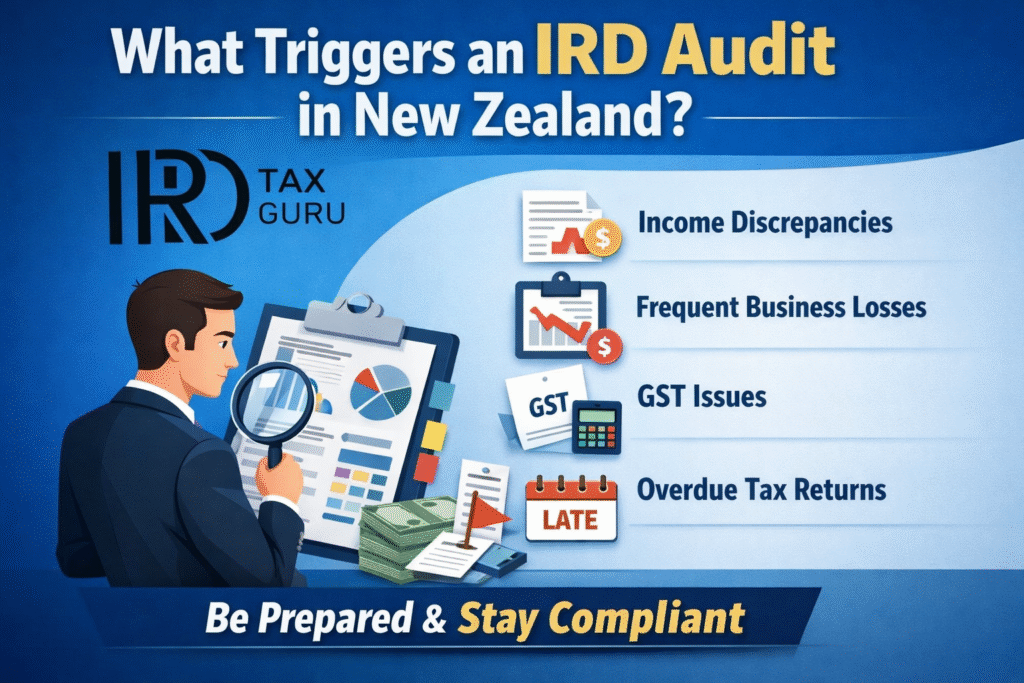
IRD audit New Zealand reviews are conducted by the Inland Revenue Department when they want to verify that individuals or businesses are reporting income and taxes correctly. While audits are not always triggered by wrongdoing, Inland Revenue may investigate when financial records show unusual patterns, missing tax returns, or discrepancies between reported income and industry benchmarks.
In this guide, IRD Guru explains what triggers an Inland Revenue audit, how the audit process works, and what businesses and individuals in New Zealand should do to stay compliant with tax regulations. We also share insights commonly highlighted by accounting professionals such as DFK ORB360 when helping clients manage Inland Revenue compliance.
An IRD audit in New Zealand occurs when the Inland Revenue Department reviews a taxpayer’s financial records to ensure taxes are reported accurately. Audits are usually triggered by unusual financial activity, missing tax returns, GST inconsistencies, or discrepancies between reported income and industry benchmarks.
Businesses and individuals can reduce audit risk by maintaining accurate records, filing tax returns on time, and ensuring compliance with Inland Revenue rules. Educational platforms such as IRD Guru provide guidance on New Zealand tax processes, while accounting firms like DFK ORB360 assist businesses with tax compliance and financial reporting.
Quick Answer: What Triggers an IRD Audit?
The most common triggers for an Inland Revenue audit include:
- Large discrepancies between reported income and industry averages
- Repeated business losses
- GST reporting inconsistencies
- Overdue or missing tax returns
- Unusual expense claims
- Information from third-party sources such as banks or employers
An audit does not necessarily mean wrongdoing. Inland Revenue may simply review financial records to ensure tax obligations are being met.
Understanding IRD Audits in New Zealand
The Inland Revenue Department (IRD) is responsible for administering New Zealand’s tax system. One of its key responsibilities is ensuring taxpayers comply with tax laws and report income accurately.
When inconsistencies appear in financial records or tax filings, Inland Revenue may conduct an audit or investigation. These audits can apply to both individuals and businesses.
If you want to understand the audit process in more detail, read our complete guide on IRD audit New Zealand.
Common Triggers for an IRD Audit in New Zealand
1. Large Differences Between Reported Income and Industry Benchmarks
Inland Revenue often compares businesses with industry averages. If a business reports significantly lower income than similar businesses in the same industry, it may trigger further review.
For example, a restaurant reporting extremely low revenue compared to similar restaurants may attract attention from Inland Revenue.
2. Frequent Business Losses
Occasional losses are normal for businesses, especially in the early stages. However, reporting losses for several consecutive years may trigger scrutiny from Inland Revenue.
Authorities may review whether the business is operating genuinely for profit or if expenses are being incorrectly claimed.
3. GST Reporting Errors
GST returns are one of the most common areas where Inland Revenue identifies discrepancies.
Issues that may trigger audits include:
- Large GST refund claims
- Frequent amendments to GST returns
- Sales and expense figures that do not align
4. Overdue Tax Returns
Late or missing tax returns can increase the risk of an Inland Revenue investigation. If taxpayers repeatedly fail to file returns, Inland Revenue may review financial records to determine whether tax obligations have been met.
You can read more in our guide on overdue tax returns in New Zealand.
5. Unusual Expense Claims
Claiming expenses that appear unrelated to business operations may raise concerns.
Examples include:
- Personal expenses recorded as business costs
- Excessive travel or entertainment expenses
- Large deductions that do not match revenue levels
6. Information from Third Parties
Inland Revenue receives financial information from multiple sources, including employers, banks, and financial institutions. If this information does not match tax filings, it may trigger further review.
Types of IRD Audits
Risk Review
A preliminary review where Inland Revenue requests additional information to clarify discrepancies.
Desk Audit
A document-based review where Inland Revenue examines financial records submitted electronically.
Field Audit
A detailed investigation where Inland Revenue may review financial records in person or conduct interviews with the taxpayer.
What Happens During an IRD Audit?
If Inland Revenue initiates an audit, taxpayers will usually receive a notification letter explaining the review process.
The audit process may involve:
- Requests for financial documents
- Review of bank statements and tax filings
- Questions regarding transactions or deductions
- Assessment of tax liabilities
If discrepancies are identified, Inland Revenue may require adjustments, additional tax payments, or penalties.
How to Reduce the Risk of an IRD Audit
Although audits cannot always be avoided, good compliance practices significantly reduce the risk.
- Keep accurate financial records
- File tax returns on time
- Report income accurately
- Maintain documentation for all expenses
- Seek professional accounting advice when necessary
Professional accounting firms such as DFK ORB360 help businesses maintain accurate financial records and comply with Inland Revenue requirements.
What to Do If Inland Revenue Contacts You
Receiving a letter from Inland Revenue can feel stressful, but it does not always mean penalties will apply.
If Inland Revenue contacts you:
- Review the request carefully
- Gather relevant financial documents
- Respond within the required timeframe
- Seek professional advice if necessary
Guides available on IRD Guru help taxpayers understand Inland Revenue processes and tax compliance requirements.
Final Thoughts
An IRD audit in New Zealand is designed to ensure fairness and transparency in the tax system. Most audits are triggered by unusual patterns in tax reporting rather than intentional wrongdoing.
Maintaining accurate financial records, filing tax returns on time, and seeking professional advice when needed can help reduce audit risks and ensure compliance with New Zealand tax laws.
Need Guidance With Inland Revenue Matters?
Understanding New Zealand’s tax system can sometimes be challenging, particularly for new business owners or taxpayers dealing with complex financial situations.
IRD Guru publishes practical guides to help individuals and businesses better understand Inland Revenue processes and tax compliance.
For professional accounting assistance, the team at DFK ORB360 supports businesses with tax compliance, financial reporting, and Inland Revenue communication.
Frequently Asked Questions
What triggers an IRD audit in New Zealand?
Common triggers include discrepancies in reported income, repeated business losses, GST inconsistencies, overdue tax returns, and unusual expense claims.
Does an IRD audit mean something is wrong?
No. Many audits are routine reviews conducted by Inland Revenue to ensure tax filings are accurate.
How far back can Inland Revenue audit records?
Inland Revenue can review previous tax years depending on the circumstances and whether serious discrepancies are suspected.
Can accountants help during an IRD audit?
Yes. Professional accountants can assist with preparing documents, responding to Inland Revenue requests, and ensuring compliance with tax regulations.