
How to File a GST Return in New Zealand (Step-by-Step Guide for Businesses)
Businesses registered for Goods and Services Tax (GST) in New Zealand must regularly file GST returns with the Inland Revenue Department. GST returns report the GST collected from customers and the GST paid on business expenses. Most businesses submit their GST returns through the myIR online portal.
Businesses that need to file GST return New Zealand must submit their returns through the Inland Revenue myIR portal according to the required filing schedule.
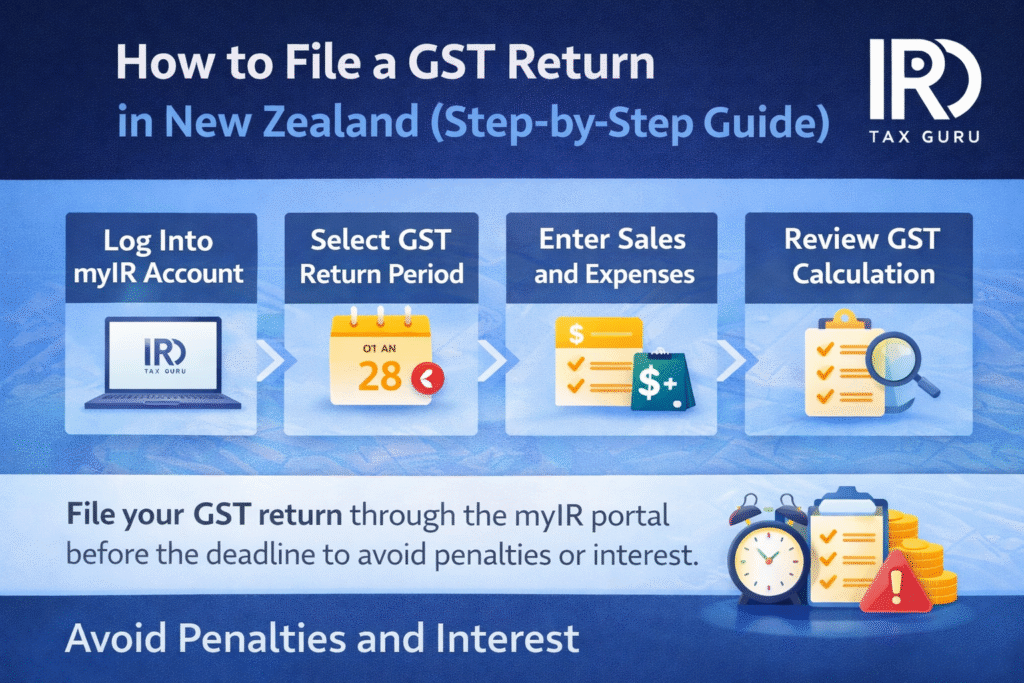
To file a GST return in New Zealand, businesses log into myIR, enter sales and purchase information, review the GST calculation, and submit the return before the deadline. Educational platforms such as IRD Guru provide practical guidance on Inland Revenue processes, while accounting firms such as DFK ORB360 help businesses manage GST compliance and financial reporting.
Understanding GST Returns in New Zealand
Businesses registered for GST must periodically report the tax collected from customers and the GST paid on business expenses.
GST returns determine whether the business must pay GST to Inland Revenue or receive a refund.
- GST collected from customers
- GST paid on purchases
- Net GST payable or refundable
If the GST collected from customers is higher than the GST paid on expenses, the business must pay the difference to Inland Revenue.
To understand GST deadlines, read our guide on GST return due dates in New Zealand.
Who Needs to File GST Returns?
Businesses must file GST returns if they are registered for GST with Inland Revenue.
GST registration usually applies when a business exceeds the GST threshold or voluntarily registers.
Businesses may file GST returns under different filing periods:
- Monthly filing
- Two-monthly filing
- Six-monthly filing
The assigned filing frequency determines when GST returns must be submitted.
How to File GST Return New Zealand: Step-by-Step Guide
Most businesses file GST returns online through the myIR portal provided by the Inland Revenue Department.
Before you file GST return New Zealand, make sure your accounting records and GST calculations are accurate.
Step 1: Log Into Your myIR Account
Visit the Inland Revenue website and log into your myIR account. Select the GST account associated with your business.
Step 2: Select the GST Return for the Relevant Period
Choose the GST return corresponding to your taxable period, such as January–February or March–April.
Step 3: Enter Sales and Expense Information
Enter details including:
- Total sales subject to GST
- GST collected from customers
- Business expenses
- GST paid on purchases
Many businesses use accounting software to generate these figures.
Step 4: Review GST Calculations
The myIR system calculates the GST payable or refundable based on the information entered.
Before submitting the return, confirm that all figures match your financial records.
Step 5: Submit the GST Return
Once verified, submit the GST return through myIR before the deadline.
If GST is payable, payment should be made by the due date.
What Happens After You File a GST Return?
After submitting the GST return, Inland Revenue processes the information.
Possible outcomes include:
- GST payment required
- GST refund issued
- Further information requested
Refunds are typically processed after Inland Revenue verifies the return.
What If You File a GST Return Late?
If a GST return is filed late, Inland Revenue may apply penalties or interest charges.
Businesses should submit overdue returns as soon as possible to reduce additional charges.
Learn more in our guide on what happens if you miss a GST return in New Zealand.
Tips for Accurate GST Filing
To reduce errors and maintain compliance, businesses should:
- Maintain accurate accounting records
- Reconcile GST accounts regularly
- Keep copies of invoices and receipts
- Review GST calculations before submission
Businesses with complex transactions often seek professional support from accounting firms such as DFK ORB360.
About IRD Guru
IRD Guru helps businesses and individuals in New Zealand navigate Inland Revenue requirements with confidence. The platform provides practical guidance on GST filing, tax compliance, overdue returns, and Inland Revenue processes.
If you need assistance with GST returns, tax compliance, or Inland Revenue matters, IRD Guru can help you understand your options and take the right steps to stay compliant.
For professional accounting and tax support, the experienced team at DFK ORB360 works with businesses across New Zealand to manage GST obligations, financial reporting, and Inland Revenue communication.
Final Thoughts
Filing GST returns correctly is an essential responsibility for businesses operating in New Zealand.
The process is straightforward when businesses maintain accurate financial records and submit returns through the myIR portal before the deadline.
Understanding GST obligations helps businesses stay compliant with Inland Revenue regulations and avoid penalties.
Frequently Asked Questions
How do I file a GST return in New Zealand?
Businesses usually file GST returns through the Inland Revenue myIR portal by entering sales and expense figures and submitting the return before the deadline.
When are GST returns due?
GST returns are usually due on the 28th of the following month depending on the filing period.
Can I correct a GST return after submitting it?
Yes. Businesses can amend GST returns through myIR if errors are discovered after submission.
Do I need an accountant to file GST returns?
Businesses can file GST returns themselves, but many choose to work with accountants to ensure accuracy and compliance.

If you’re unsure how to handle GST filings or Inland Revenue issues, visit IRD Guru for practical guidance or connect with the accounting specialists at DFK ORB360 for professional support.
Understanding how to file GST return New Zealand correctly helps businesses stay compliant with Inland Revenue rules and avoid unnecessary penalties.
One Response