
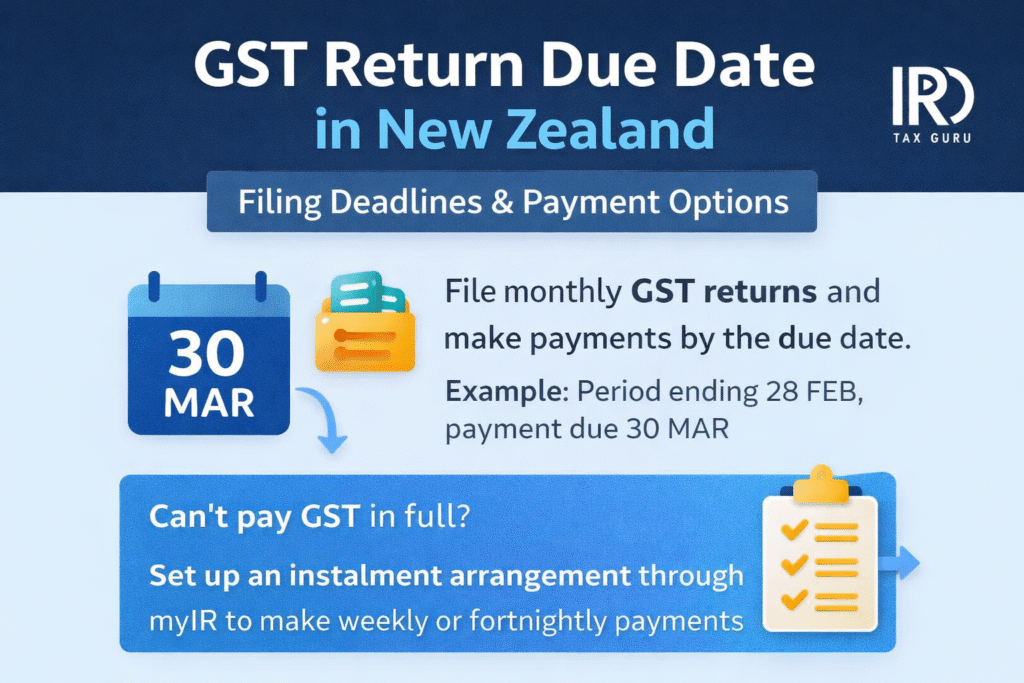
GST Return Due Date in New Zealand: Filing Deadlines and Payment Options
GST return due date New Zealand reminders are important for businesses registered for Goods and Services Tax. If your taxable period ended on 28 February, your GST return and payment are generally due by 30 March. Filing and paying GST on time helps businesses stay compliant with Inland Revenue requirements and avoid penalties.
In this guide from IRD Guru, we explain GST return deadlines, how to file through myIR, and what options are available if you cannot pay a tax bill in one lump sum.

GST Return Due Date New Zealand: Key Filing Deadlines for Businesses
Businesses registered for GST must regularly file GST returns with the Inland Revenue Department. These returns show the GST collected from customers and the GST paid on business expenses.
The difference between these amounts determines whether the business must pay GST to Inland Revenue or receive a refund.
If you want to understand how GST obligations fit within the broader tax system, you can read our guide on IRD audits in New Zealand, which explains how Inland Revenue reviews tax compliance.
Key GST Filing Dates in New Zealand
GST filing dates depend on the filing frequency assigned to your business.
Monthly GST Filing
Businesses that file GST monthly must submit returns and payments by the 28th of the following month.
Example:
- Taxable period ending 28 February
- Return and payment due by 30 March
Two-Monthly Filing
Many small and medium businesses file GST every two months.
Six-Monthly Filing
Some businesses with lower turnover may qualify for six-monthly filing.
For the official list of tax deadlines, visit:
How to File a GST Return
Most GST returns are filed online using Inland Revenue’s myIR portal.
The process typically includes the following steps:
- Log into your myIR account
- Select the GST return for the relevant taxable period
- Enter sales and purchase figures
- Confirm GST calculations
- Submit the return before the deadline
Maintaining accurate financial records is essential to ensure GST returns are correct.
What If You Cannot Pay Your GST Bill?
Sometimes businesses may experience temporary cash flow challenges.
If you are unable to pay a GST bill in full, Inland Revenue may allow you to set up an instalment arrangement.
This allows you to spread the payment over time instead of paying the full amount immediately.
You can also read our detailed guide on what triggers an IRD audit in New Zealand to understand why maintaining compliance is important.
How to Set Up an Instalment Arrangement in myIR
You can request an instalment arrangement directly through the myIR portal.
The general steps include:
- Log into myIR
- Select the tax bill you want to pay
- Choose the instalment arrangement option
- Propose a weekly or fortnightly repayment plan
- Submit the request to Inland Revenue
Once approved, you must follow the agreed payment schedule.
Why Filing GST Returns on Time Matters
Meeting GST deadlines helps businesses:
- Avoid penalties and interest charges
- Maintain good tax compliance
- Reduce the risk of Inland Revenue investigations
- Keep financial records accurate
Businesses that consistently miss filing deadlines may attract closer attention from Inland Revenue.
Need Guidance With GST or Inland Revenue Matters?
Understanding tax obligations in New Zealand can sometimes be complex.
IRD Guru publishes practical guides explaining Inland Revenue processes, tax compliance requirements, and GST obligations for businesses.
If you require professional accounting support, the team at DFK ORB360 assists businesses with financial reporting, GST compliance, and Inland Revenue communication.
Frequently Asked Questions
When is GST due in New Zealand?
GST returns are usually due on the 28th of the following month depending on your filing period.
What happens if I miss a GST payment?
Inland Revenue may apply penalties and interest if GST returns or payments are late.
Can I pay GST in instalments?
Yes. Inland Revenue allows taxpayers to set up instalment arrangements through myIR.
Where can I check GST deadlines?
You can check official tax deadlines on the Inland Revenue key dates page.

GST compliance is an important part of maintaining good tax standing in New Zealand. Businesses that miss filing deadlines or fail to keep proper financial records may face additional scrutiny from Inland Revenue. To understand how tax compliance issues can lead to further reviews, you can read our guide on what triggers an IRD audit in New Zealand. If you are dealing with missing tax filings, our article on overdue tax returns in New Zealand explains the risks and available support options. You can also explore our complete resource on IRD help in New Zealand for guidance on Inland Revenue compliance and tax obligations.
3 Responses