
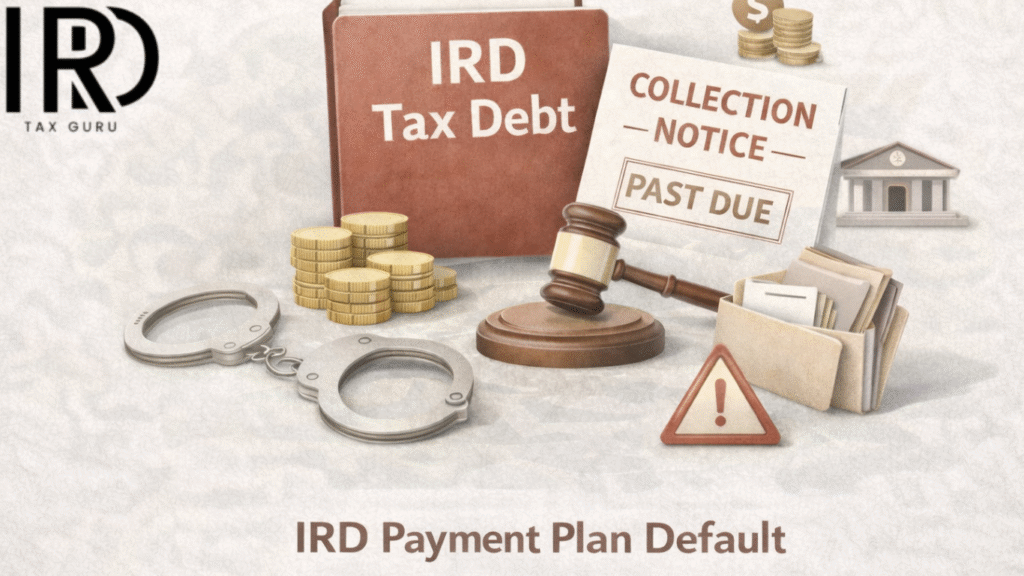
What Happens If You Default on an IRD Instalment Plan?
An IRD instalment plan is designed to help New Zealand taxpayers manage tax debt in manageable payments. However, life and cash flow do not always go to plan. If a payment is missed or an agreement is not followed, the instalment plan may be considered to be in default.
What Happens If You Default on an IRD Instalment Plan?
Understanding what happens when an instalment plan is defaulted — and what options remain — can help prevent penalties, interest, and enforcement action from escalating.
If you default on an IRD instalment plan, Inland Revenue may cancel the arrangement, reinstate late payment penalties, continue charging use-of-money interest, and resume enforcement actions such as bank deductions or legal recovery. However, taxpayers who contact IRD quickly may be able to reinstate or renegotiate the instalment plan before enforcement escalates.
What Counts as Defaulting on an IRD Instalment Plan?
An instalment plan may be considered in default if:
- A scheduled payment is missed or paid late
- Payments are consistently underpaid
- Agreed filing obligations are not met
- IRD is not informed of changes to financial circumstances
Even a single missed payment can trigger review of the arrangement.
What Happens Immediately After a Missed Payment?
In many cases, IRD will first issue a reminder or notification. This is a critical window where action can still prevent cancellation of the plan.
If no response is received, IRD may treat the arrangement as breached and move to the next stage.
What Happens If You Ignore IRD Tax Debt?
Do Penalties and Interest Restart?
Yes. When an instalment plan is cancelled due to default, late payment penalties may be reinstated. Use-of-money interest generally continues to accrue throughout the life of the debt.
This means defaulting can quickly make the debt more expensive than before the plan was set up.
IRD Penalties & Interest Explained
When Does IRD Resume Enforcement Action?
If the default is not addressed, IRD may resume enforcement actions such as:
- Direct deductions from bank accounts
- Salary or income deductions
- Offsetting future tax refunds
- Legal recovery in serious cases
Once enforcement begins, taxpayers have far less control over repayment terms.
Can You Recover After Defaulting?
In some cases, yes. IRD may allow a defaulted instalment plan to be reinstated or replaced if:
- Contact is made quickly
- The missed payment is explained
- A revised payment proposal is realistic
Delays significantly reduce the chance of recovery.
How to Apply for an IRD Instalment Plan
Impact on Businesses vs Individuals
For businesses, defaulting may increase scrutiny, create cash-flow disruption, and expose directors to liability. For individuals, it can lead to reduced income and restricted access to funds.
Official IRD Guidance
IRD – Debt and Insolvency Guidance
Why IRD Instalment Plans Are Cancelled After Default IRD instalment plans are based on trust and compliance. When a payment is missed, IRD may interpret this as a sign that the taxpayer can no longer meet the agreed terms. Repeated missed payments, lack of communication, or failure to file required returns increase the likelihood of cancellation. From IRD’s perspective, cancelling a defaulted instalment plan allows them to regain control over debt recovery. This is why even short delays without explanation can have serious consequences.People Also Ask: IRD Instalment Plan Defaults
What counts as defaulting on an IRD instalment plan?
Missing a payment, paying late without approval, or failing to meet agreed terms can result in default.
Can IRD cancel an instalment plan?
Yes. IRD can cancel an instalment plan if payments are missed or conditions are not met.
Is it better to contact IRD before missing a payment?
Yes. Contacting IRD early significantly improves the chance of keeping or renegotiating a plan.